
Choosing the right rhinoplasty surgeon comes down to a mix of board certification, hands-on experience with noses specifically, and how clearly a surgeon communicates during your consultation. Board certification alone narrows the field to physicians who’ve met a rigorous, standardized bar for surgical training. From there, case volume, revision experience, and the surgeon’s approach to functional problems separate a good technical match from the right one for your anatomy and goals.
Dr. Jeffrey Lisiecki is a board-certified plastic surgeon practicing on Manhattan’s Upper East Side, with fellowship training specifically in rhinoplasty and aesthetic surgery and a research record focused on rhinoplasty. In this blog, we’ll walk through what board certification actually means, what training and recognition Dr. Lisiecki brings to rhinoplasty, and the questions worth asking at any consultation before you commit to a surgeon.
Which Board Certifications Matter for Rhinoplasty? ABPS, ABFPRS and ABOto Explained
Rhinoplasty sits at an unusual crossroads in medicine, since it’s performed by surgeons who trained through a few different paths. Understanding those paths helps you read a surgeon’s credentials accurately rather than taking a title at face value.
The American Board of Plastic Surgery (ABPS) is recognized by the American Board of Medical Specialties (ABMS) and requires a minimum of six years of surgical training after medical school, according to the American Society of Plastic Surgeons. ABPS-certified surgeons train broadly across reconstructive and cosmetic procedures of the face, breast, and body before many go on to pursue additional fellowship training in a specific area like aesthetic surgery or rhinoplasty. The volume of surgery required in this path is the highest, as it entails the most years of dedicated surgical training and there are extensive case requirements that must be met in order to graduate from plastic surgery residency. The ABPS board certification process itself is an extensive process involving written and oral examinations, and a case collection process where surgeons must present and be tested on their own actual surgical cases. Dedicated fellowship training, like the one Dr. Lisiecki completed, allows for an even more focused training in a specific area or procedure such as aesthetic surgery and rhinoplasty.
ABFPRS, the American Board of Facial Plastic and Reconstructive Surgery, represents a different pathway. Surgeons certified through ABFPRS typically complete a five year residency in otolaryngology, often followed by a facial plastic surgery fellowship which may include things like head and neck reconstruction or aesthetic facial surgery.
A third credential worth knowing is the American Board of Otolaryngology (ABOto), which certifies otolaryngologists more broadly and doesn’t require the additional facial plastics training that ABFPRS does. One point worth flagging clearly for patients doing their own research: no board recognized by the ABMS is actually named “the American Board of Cosmetic Surgery,” despite that phrase appearing in some marketing materials. If you see that term used as a credential, it’s worth asking directly which ABMS-recognized board the surgeon holds.
Dr. Lisiecki is board-certified by the American Board of Plastic Surgery, the pathway described above involving a six-year surgical residency, and he also completed additional fellowship training in aesthetic surgery, which focused on rhinoplasty and facial rejuvenation.

Training and Research Dr. Lisiecki Brings to Rhinoplasty
Beyond the base certification, the specific training a surgeon pursues afterward says a great deal about where their technical focus lies. Dr. Lisiecki completed a six-year plastic and reconstructive surgery residency at the University of Michigan before pursuing an Aesthetic Society-endorsed fellowship in aesthetic surgery at the Dallas Plastic Surgery Institute, with advanced training specifically in facial rejuvenation, rhinoplasty, and complex revision cases.
His research record reflects that same focus. Dr. Lisiecki received the Rollin K. Daniel Award from the Rhinoplasty Society, a recognition given for original research presented to a society of surgeons who specialize exclusively in nasal surgery. He also serves on the editorial board of Plastic and Reconstructive Surgery, the field’s leading peer-reviewed journal, a role that involves evaluating new surgical research before it reaches publication. For patients, this kind of ongoing engagement with published research is one signal that a surgeon’s techniques are informed by current evidence rather than habit alone.
Beyond Certification: Rhinoplasty Volume, Revision Experience and Functional Training
Certification tells you a surgeon met a training threshold. It doesn’t tell you how often they perform rhinoplasty specifically, which matters because the nose is technically unforgiving: small asymmetries in cartilage work show up clearly on a feature everyone sees in profile and head-on.
A few questions help fill in that picture during a consultation. Ask how many rhinoplasties the surgeon performs annually, since a surgeon who does them frequently brings a different depth of experience and pattern recognition than one who performs the procedure occasionally. Ask what proportion of their caseload involves revision surgery, correcting a previous rhinoplasty that didn’t go as planned, since a strong revision practice often signals that other surgeons’ complex cases land on that surgeon’s table. The stakes here are real: one large study tracking more than 175,000 septorhinoplasty patients found a revision rate of just 3.1 percent after a first surgery, compared with 11.0 percent after a second procedure, according to research published on PMC. Getting the first operation right carries real weight.
If breathing function matters to you alongside appearance, ask specifically about the surgeon’s experience with septal work and nasal valve repair, and whether they use cartilage grafts to reinforce areas prone to collapse. A surgeon who treats functional and cosmetic goals as separate conversations, rather than one integrated plan, may not be the strongest fit if you’re hoping to address both in a single procedure.
Patient satisfaction research backs up why case selection and surgeon experience matter so much here. A study of 369 consecutive cosmetic rhinoplasty patients, published in the Aesthetic Surgery Journal, found that patients with a history of prior nasal surgery or facial fracture were more likely to need revision and more likely to report dissatisfaction with their results. That finding reinforces why a thorough history and a realistic conversation about complexity matter just as much as technical skill.
How to Read Before-and-After Galleries
A photo gallery is one of the most useful tools available to patients, provided you know what to look for. Consistent lighting, camera angle, and distance across before-and-after pairs matter more than most people realize, since a slightly tilted chin or a different light source can flatter or distort a result in ways that have nothing to do with the surgery itself.
Look for galleries that include a range of skin types, ethnic backgrounds, and nasal shapes, since this reflects a surgeon’s ability to tailor technique to different anatomy rather than applying one aesthetic template to every patient. Check whether photos include both primary and revision cases, labeled as such, since revision results often look different from a first surgery given the scar tissue and altered anatomy involved. Finally, note how much healing time has passed in each “after” photo. A result taken at a month still carries residual swelling, particularly at the tip, so photos taken closer to the one-year mark tend to reflect a more accurate final outcome.
What Happens at a Rhinoplasty Consultation
A thorough consultation covers more ground than most patients expect going in. It typically starts with a detailed health history, including any prior nasal trauma, breathing issues, or previous nose surgery. From there, the surgeon examines your nasal anatomy both externally and internally, often followed by photographs and, in some practices, computer imaging to help visualize potential outcomes.
Expect a conversation about which surgical technique fits your anatomy, whether that’s an open or closed approach, and what grafting materials might be used if structural support is needed. The surgeon should also walk through the expected recovery timeline and the realistic risks involved, rather than glossing over complications in favor of only discussing the upside. A consultation that rushes through any of these steps, or one where you leave without clarity on technique and recovery, is worth a second opinion before booking surgery.
Pricing should come up here too, even though it’s rarely the deciding factor. The American Society of Plastic Surgeons reports an average rhinoplasty surgeon’s fee of $7,637 nationally, a figure that excludes anesthesia, operating room costs, and other related expenses. Manhattan pricing varies by surgeon and case complexity, so a personalized quote during your consultation gives a far more accurate picture than any national average.
12 Questions to Ask Your Rhinoplasty Surgeon
Adapted from the American Society of Plastic Surgeons’ own guidance for choosing a surgeon, these questions give you a framework for evaluating any consultation:
- Are you certified by the American Board of Plastic Surgery or the American Board of Facial Plastic and Reconstructive Surgery? A confident surgeon states their specific board by name without hesitation.
- How many rhinoplasties do you perform each year? A good answer includes a specific range, not a vague “a lot.”
- What percentage of your rhinoplasty cases are revisions? A surgeon comfortable with this question will give you an honest number and explain what it reflects about their practice.
- Can I see before-and-after photos of patients with a nose or facial structure similar to mine? A strong answer points you to specific examples rather than a general gallery.
- What surgical technique do you recommend for my anatomy, and why? Look for an explanation tied to your specific nose, not a one-size-fits-all answer.
- Will this be an open or closed procedure? A clear answer explains the trade-offs of each approach as they apply to your case.
- Do you expect to need cartilage grafts, and where would that cartilage come from? A thoughtful surgeon explains donor site options and why one might be preferred.
- What is your experience with functional rhinoplasty if I have breathing concerns? Look for specific examples of septal or valve work, not a general reassurance.
- Where will the surgery be performed, and is that facility accredited? A good answer names the facility directly and confirms its accreditation status.
- What does recovery typically look like week by week? A thorough answer covers swelling, bruising, activity restrictions, and when results begin to settle.
- What are the realistic risks and possible complications of my specific procedure? A trustworthy surgeon discusses real risks candidly rather than minimizing them.
- What is your policy if I’m unhappy with my results or need a revision? Clarity here, in writing if possible, reflects a practice that stands behind its work.
Dr. Jeffrey Lisiecki: Rhinoplasty Expertise Rooted in Experience, Training and Research
Choosing a rhinoplasty surgeon means weighing board certification against specific training, case volume, and how clearly a surgeon communicates about your anatomy and goals. Dr. Jeffrey Lisiecki brings board certification through the American Board of Plastic Surgery, fellowship training focused specifically on aesthetic and nasal surgery, and a research record recognized by the Rhinoplasty Society, all built around a consultation process that walks patients through their options in detail. If you’re ready to discuss your own rhinoplasty goals, schedule a consultation with Dr. Lisiecki to get started.
This information is provided for educational purposes only and does not replace a consultation with a board-certified plastic surgeon. Outcomes, risks, and suitability vary from patient to patient.
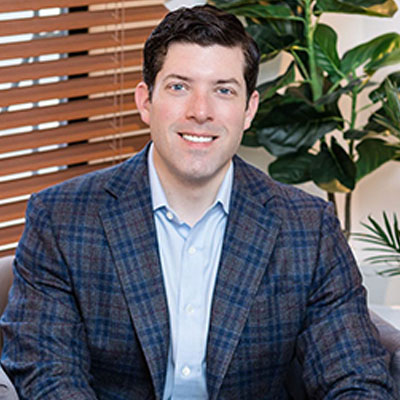
Medically Reviewed by: Dr. Jeffrey Lisiecki
Board-Certified Plastic Surgeon
About Dr. Lisiecki